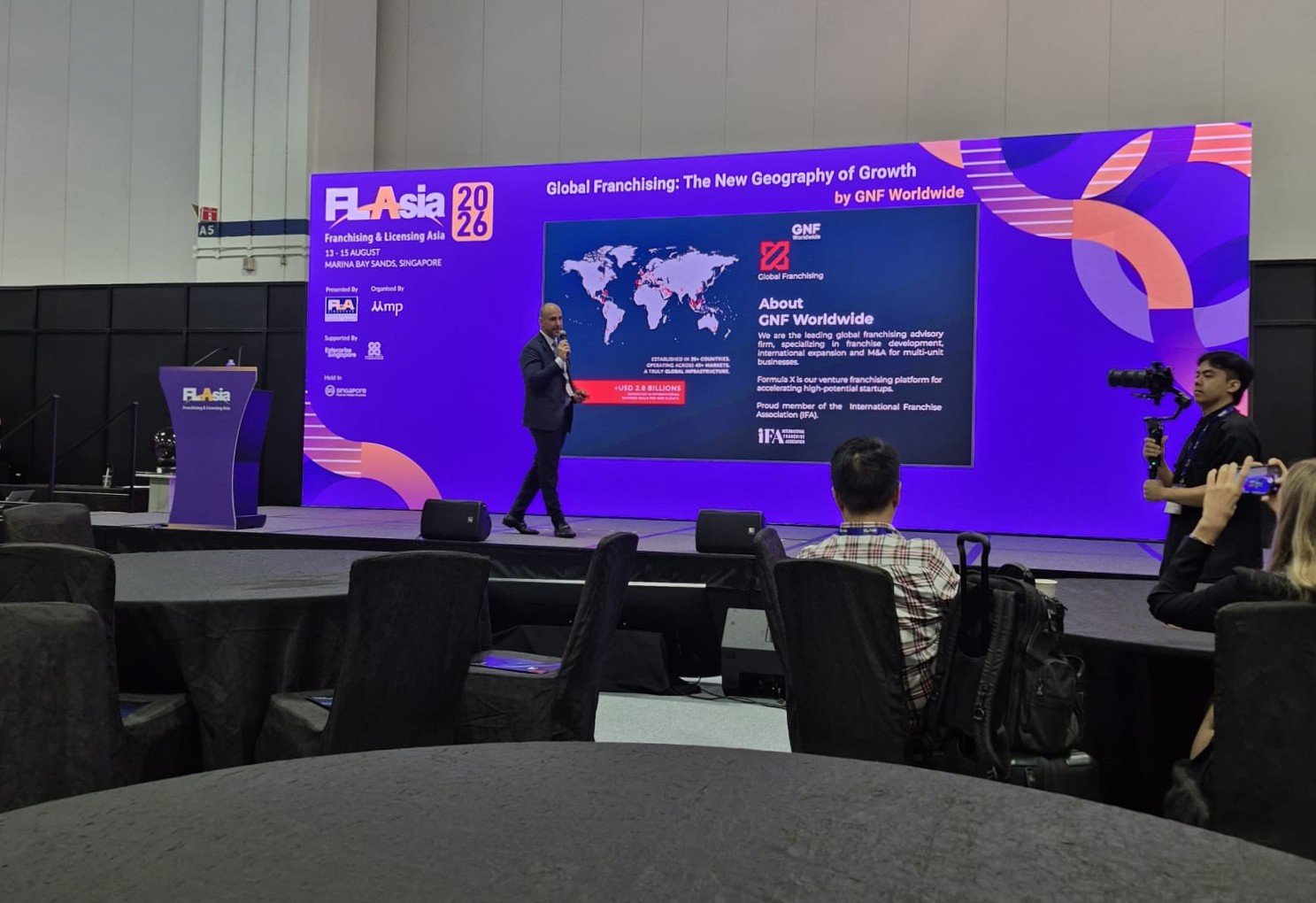
Just came back from Franchise Licensing Asia 2026 in Singapore and it was an interesting experience.
A solid education has a strong ROI for anyone that invests in it, and it’s no surprise there’s a growing demand for supplemental education in the ASEAN region. Nearly every school and educator we spoke to was either exploring expansion beyond Singapore or doubling down locally to meet demand.
Singapore’s role as a regional leader isn’t just about pushing the technology envelope, it’s also about setting the legislative pace. That came through clearly in a separate conversation on data protection, where the topic that kept resurfacing was how prevalent generative AI has become in day-to-day work. Nearly everyone uses AI tools now, but the real risk for organizations is uncontrolled use: critical data getting fed into these systems without leadership even knowing it’s happening.
The Hard Line on AI and Personal Data
In July, Singapore’s Personal Data Protection Commission finalized its Advisory Guidelines on the Use of Personal Data in Generative AI. This spells out how personal data should be handled across an AI system’s lifecycle from development to deployment, and after. Importantly, the guidelines also make clear that responsibility doesn’t stop with whoever built the model. Model providers, system providers, and the organizations actually deploying the tool each carry their own obligations under these guidelines.
For a single location school, it’s not a major issue. For a franchise network moving admissions data, payment details, and student records across dozens of locations and multiple countries, it poses some serious questions and compliance checks. This shift isn’t purely a Singaporean matter, and we’re seeing the same shift in the US, with growing state and federal privacy laws pushing in the same direction.
The pitfall is that users might not even realize that a risk is happening. Someone drafting a parent email, summarizing enrolment data, or even asking a free AI tool to review student performance notes before a board meeting. None of it feels like a data breach in the moment, just individuals wanting to get work done faster.
That’s where the risk is; paste confidential student, franchisee, or financial data into a free, consumer grade LLM and you’ve likely lost visibility into where that data goes, how long it’s retained, and whether it gets used to train the next version of the model. Most free tiers were never built with contractual data protection guarantees or breach notification obligations in mind, because they weren’t built for regulated, multi jurisdiction businesses. They were built for individual convenience.
For a franchisor already managing the operational complexity of dozens of locations, this is the risk that doesn’t show up on a checklist until it’s already happened. And with regulators now explicitly assigning responsibility to the deployer, not just the AI vendor, “we didn’t realize the tool worked that way” isn’t a defense.
Built to Stay Inside Your Walls
This is exactly the gap Azend Technologies has spent the last few years closing for education clients, including over 300 centers across more than 40 states in the US. When we build AI into a platform, whether it’s automating exam creation, summarising student progress, or coordinating franchise communications, it runs inside infrastructure the client controls.
If you’re running a franchise network or a multi-location school and you’re staring down the same question (how do we use AI without handing our data to someone else’s black box), let’s have a chat.